


ORLAND PARK, Ill. — Artificial Intelligence is already making a positive impact in medicine. From detecting breast and colon cancer to developing new drugs. Now device makers are using machine learning to tackle the number one complaint among an aging population. Hearing aids boost volume but they also turn up the noise.
It’s a setting many older people avoid.
Patrick Jarzembowski couldn’t hear the conversation at a loud restaurant or social setting even though he’s worn hearing aids for seven years.
“Every other word was ‘huh?’” he said.
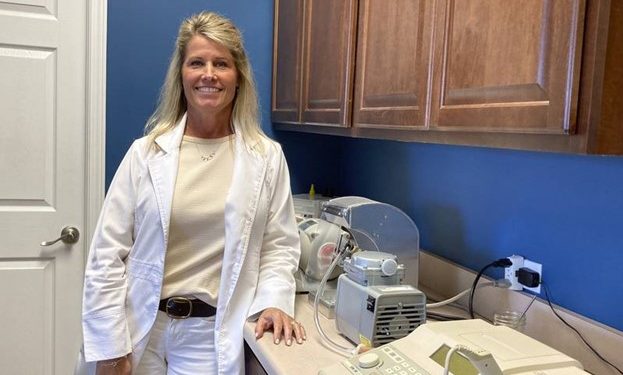
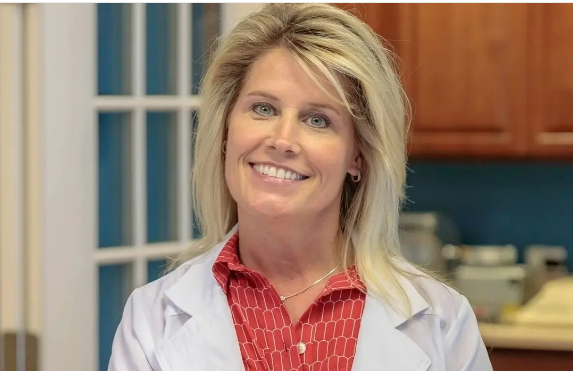
Jackie Sullivan is a hearing instrument specialist at Prescription Hearing at Orland Hearing Aid Center in Palos Park.
“Most patients by the age of 65 already one in three have hearing loss that needs help,” Sullivan said.
“I was really surprised shocked actually how much things changed,” Jarzembowski said of his device.
What’s changed is what’s inside the tiny devices.
“With artificial intelligence, it’s taking your speech information and that noise info and it’s able to do that noise reduction by increasing the conversation that you’re wanting to hear in those loud settings,” Sullivan said.
“It’s phenomenal and I’m not an internet, I’m not a technology kind of guy,” Jarzembowski said.
Jarzembowski prefers trap shooting to technology. The sport likely cost him his hearing.
“When I was having hearing problems I would get aggravated, frustrated,” he said.
His previous models helped, but his latest pair – enhanced by AI – make a major difference.
“When you are in these settings, whether it be a meeting or group, and you just feel as if the automatic features in the hearing aid aren’t doing enough to really filter as much of the noise as you’d like, that’s where this spheric mode is going to come into play,” Sullivan said.
“Spheric mode” is the AI component that’s been taught to process like the human brain.
“That’s this artificial intelligence taking over now saying, ‘Hey, I acknowledge that these sound waves coming into this chip are not speech and so I want to reduce that,’” Sullivan said. “So that Pat’s in a restaurant, Pat wants to hear the speech waves coming in.”
The new model includes two chips. One does the bulk of the work. It absorbs sound and speech and makes adjustments automatically. But the second chip serves a sole purpose – it differentiates speech information from noise information. The result is a 10-decibel reduction in background noise.
“And so the secondary chip is able to obtain data, analyze it and then actually make predictions based on previous experiences,” Sullivan said.
“You hear everything. I’m not saying, ‘Huh? Excuse me? Pardon me?” Jarzembowski said. “And it’s a joy now to talk to someone in a restaurant.”
“We had a patient last week who walked outside and said, ‘Oh my gosh. I could hear the bird chirp!’ And those are the things that make you love what you do day in and day out.”
The bigger benefit of hearing aids is how they can help with social isolation. Improvements in hearing correlate with improved overall health. Insurance may cover some or all of the cost of the AI devices, which range about $2,700-$3,000 per ear.